Find the Money
Budgeting & Cash-Flow Hacks to Find Money You Didn't Know You Had
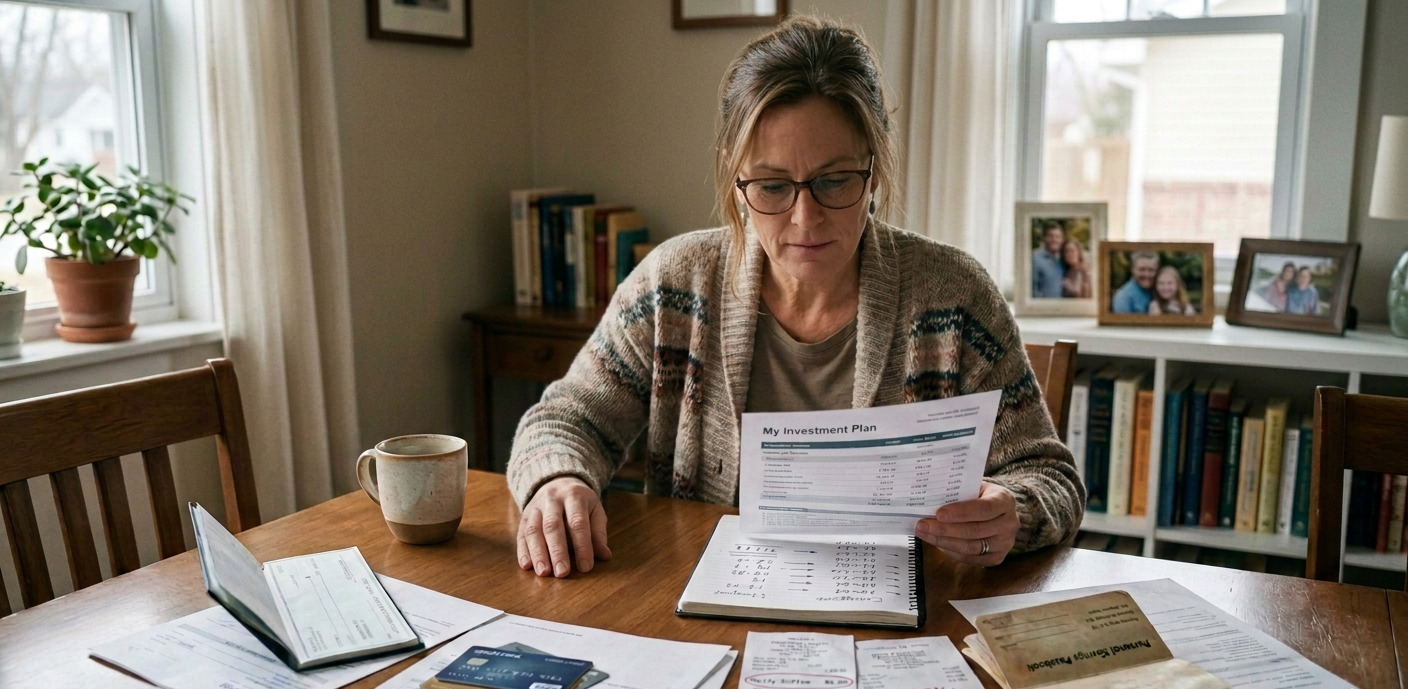
I Get It—You're Thinking: "Where's the Money Supposed to Come From?"
"Coach, this all sounds great, but I'm living paycheck to paycheck. Where am I supposed to find an extra $200 a month?"
And after 31 years in the classroom, I get it. Teacher salary + real life = tight budget.
But here's the truth most teachers miss: Some teachers discover they already have the money — it's just leaking out in places they haven't noticed yet.
I'm not talking about cutting out coffee. I'm not telling you to pick up a second job (though I'll share how I did that too). I'm talking about redirecting what you're already spending so you can invest it instead.
 Coach Marty says:
Step 1: The Mindset Shift
Before we dive into strategies, here's a mindset shift many educators find helpful: thinking about money as something to redirect, not sacrifice.
This is NOT about:
- Feeling guilty about your spending
- Cutting out everything you enjoy
- Working yourself into the ground
This IS about:
- Being intentional with what you're already spending
- Finding leaks you didn't even know existed
- Redirecting that money toward your future self
Think of it this way: You're not "giving up" money. You're just moving it from one pocket to another. From the "leak" pocket to the "wealth-building" pocket.
The 30-Day Money Audit Challenge
For the next 30 days, track EVERY dollar you spend. Use an app, use a notebook, use whatever works. You're not judging yourself — you're just getting data. Most teachers discover at least $150/month in leaks they didn't know they had.
I use the free version of Ramsey's EveryDollar to budget every month. You find out quick where your money is going — and once you see it, you can't unsee it.
Step 2: The Big Wins (Low-Hanging Fruit)
Let's start with the easy stuff — the places where money is leaking out without you even realizing it.
Here is what the data shows: housing, transportation, and food are the three biggest line items in most household budgets. If you want to make changes that actually move the needle, those three categories give you the biggest bang for your buck. Keep that in mind as you work through these strategies — some of the biggest wins below attack all three.
I moved into a studio apartment to cut my housing costs — that story is in Module 1, and it was one of the biggest financial moves I ever made.
1. The Car Payment Trap
According to Experian's State of the Automotive Finance Market report, the average new car payment in America is around $740/month. For many teachers, that's more than they contribute to their 403(b) each month. And here's the thing — a car starts losing value the moment you drive it off the lot. Meanwhile, that same money invested would be growing.
Coach Marty's Car Story:
I bought a used 2013 Honda Civic in 2015 and drove it for 9 years until 2024. It took me a few years to pay it off, but then I drove it with no payments for about 6 years. It ended up with over 200,000 miles on it, but it was a great car and drove just fine.
It would have been easy to go out and get a new car — start the whole payment process all over again. But by that point, I had a different mindset. I knew that continuing to drive this paid-off car and not taking on a $400 or $500 monthly payment would help me start my investing journey. Every month without a car payment was money I could redirect toward my 403(b) and 457(b). The years I ended up driving the paid-off Civic were some of the most important years of my financial journey.
📋 The 20-3-8 Rule for Buying a Car (popularized by The Money Guy Show): Put 20% down, pay it off in 3 years or less, and keep the car payment under 8% of your income. For a teacher earning $70,000, the math works out to: $70,000 × 8% = $5,600/year ÷ 12 = about $467/month. You're debt-free in 3 years and back to investing sooner.
📊 What Is Opportunity Cost?
Opportunity cost is what you give up when you choose one thing over another. Every dollar has only one job at a time — so when you spend $467/month on a car payment, you're also choosing not to invest that $467/month.
Here's what that decision looks like over time:
$467/month car payment for 10 years (assuming continuous car payments) = $56,040 spent (on a depreciating asset)
$467/month invested for 10 years at 7% = ~$81,000 (and growing)
The opportunity cost of that car payment: $81,000+
This doesn't mean you should never buy a car. It means you should understand what every financial decision is really costing you — not just the sticker price, but the growth you're giving up. Once you start thinking this way, every spending decision looks different.
*Assumes a hypothetical 7% average annual return for illustration purposes. Actual returns will vary and are not guaranteed.
Potential Savings: $300–$700+/month (by keeping your current car longer)
2. The Eating Out Reality Check
This one is personal — eating out was one of my biggest money leaks. A $15 lunch here, a $40 dinner there — it adds up fast. The average American household spends over $300/month eating out, and many spend far more without realizing it. Check your bank statement for the last 30 days and add up every restaurant, fast food, and coffee shop purchase. The number will probably surprise you.
You don't have to stop completely — but cutting back even halfway can free up $150–$200/month that goes straight toward your retirement.
Savings: $150–$200/month
3. The Cell Phone Bill Hack (MVNOs)
This may be one of the most overlooked money-saving moves for teachers. If you're paying $70, $80, or even $100+/month to Verizon, AT&T, or T-Mobile — many educators find they're paying more than necessary.
What's an MVNO? A Mobile Virtual Network Operator is a wireless carrier that doesn't own the towers — they lease them from the big three. That means in many areas, you get access to the same underlying network — just without the massive overhead costs that get passed on to you.
Every major carrier has MVNOs that run on their network:
← Scroll to see full table →
You keep your same phone, same phone number, same coverage area. The only thing that changes is the bill — dramatically.
Potential Savings: $50–$140/month per line
Coach Marty's MVNO Story:
Not ready to switch? Ask your current carrier this one question:
“Do you offer an educator or teacher discount?”
Verizon, AT&T, and T-Mobile all offer educator discounts — but they rarely advertise them. You typically need to verify with a school email or pay stub. Educator discounts on these carriers typically range from $10–$25/month — but you have to ask.
4. The Subscription Audit
Streaming services, app subscriptions, gym memberships you forgot about, Amazon Prime add-ons — they add up FAST.
Total Potential Savings: $65–$85/month
Coach Marty's tip: I switched to YouTube TV years ago and saved $50–$100/month instantly. Other options include Hulu + Live TV, Sling TV, or even free services like Pluto TV paired with a $20 antenna.
🆓 Free option most teachers don't know about: Between three completely free tools, some educators find they can eliminate their entire TV bill.
Pluto TV — 250+ live channels, no credit card, no subscription. Personally, I am a huge fan of Pluto TV — especially all the classic TV channels featuring the shows I grew up watching as a kid. It is free, it is fun, and it never asks for a credit card.
A $20 antenna pulls in dozens of free over-the-air HD network channels (NBC, ABC, CBS, Fox). Use The Free TV Project to see what's available at your address.
Kanopy — the one most people have never heard of. It's a free, ad-free streaming service available through your public library card, with more than 30,000 films including documentaries, indie films, foreign films, and classics. Your library pays the cost — you pay nothing. Go to kanopy.com, select your library, and sign up with your library card number. It works on your phone, computer, Roku, and smart TV. Note that most libraries set a monthly limit on how many titles you can check out (typically 10–30 per month) — more than enough for most households.
Between these three, it's possible to watch live TV, network channels, and movies without paying a single streaming bill.
5. Grocery Strategies
- Meal prep on Sundays: Cook 3 dinners at once, portion them out. Saves time AND money during the week.
- Shop with a list: Impulse buys add 20–30% to your grocery bill. Stick to the list.
- Generic brands: The store brand cereal is the same cereal. Save 30–40% on groceries just by going generic.
Savings: $100–$150/month
6. The Internet Bill You Never Question
Here's one most people overlook: your internet bill. You signed up years ago, maybe got a promotional rate that expired, and now you're quietly paying $80, $100, or more per month without ever checking if there's a better option. Sound familiar?
Four ways to cut your internet bill:
- Call your provider and negotiate. Tell them you're considering switching. Many providers will drop your rate $20–$40/month just to keep you. It's a 15-minute phone call that could save you hundreds a year. Sometimes new plans become available that weren't there when you first signed up — this alone is potential money savings.
- Switch to wireless home internet. Examples like T-Mobile 5G Home Internet or Verizon 5G Home have historically run around $50/month with no contracts and no equipment fees (current pricing varies by area). Same concept as the MVNO hack — the technology has caught up, and you might not need a traditional cable internet connection anymore.
- Downgrade your speed. This is the big one most people miss. You might be paying for 500 Mbps or even a gigabit plan when you don't need anywhere close to that.
- Ask about educator or employee discounts. Some regional providers like AT&T and Cox occasionally offer them — but like phone discounts, they're rarely advertised. A 2-minute ask at the end of your negotiation call costs nothing.
Coach Marty's tip: I dropped to 100 Mbps and noticed zero difference — no buffering, no issues. Unless you have competitive gamers at home, you probably don't need the speed you're paying for.
Potential Savings: $20–$60/month
7. The Insurance Review
When's the last time you actually shopped around on your insurance? Most people set it and forget it — and quietly overpay for years. A single afternoon of calls could save you $100+/month.
Your Insurance Checklist — Call and Ask:
- Auto insurance — Ask your current carrier for any educator, low-mileage, safe driver, or bundling discounts. Then call 1-2 competitors and ask the same.
- Home or renters insurance — Often cheapest when bundled with auto. If you're renting, many teachers skip this entirely — it's usually $10–$20/month and worth having.
- Life insurance — If you have employer coverage through your district, check if it's enough. Term life is almost always cheaper than what's offered through work.
Examples of Budget-Friendly Carriers by Category:
- Auto: Geico, Progressive, State Farm
- Home/Renters: Lemonade (app-based, no agents, instant quotes), State Farm, Allstate
- Life (term): Haven Life, Bestow, Banner Life — all online, no pushy agents
- Bundle discount: State Farm and Allstate are consistently strong for auto + home bundles
Potential Savings: $50–$150/month
Rates vary significantly by location, driving record, and coverage needs. These are examples of commonly cited budget-friendly options — always compare at least 2–3 quotes before switching.
8. Teacher-Specific Money Leaks
Let's talk about the spending that's unique to teachers:
- Classroom supplies you buy yourself: Set a hard monthly limit. Use DonorsChoose.org to crowdfund supplies instead of paying out-of-pocket.
- Lunch spending at school: Buying lunch every day = $8/day × 180 school days = $1,440/year. Meal prep on Sundays. Even cutting this in half saves you $720/year. I started bringing my own lunch about 10 years into my career — that was a lot of savings over the next 21 years!
- Coffee runs: $5/day × 5 days × 36 weeks = $900/year. Make coffee at home, bring a thermos. Save $750+/year.
Total Potential Savings: $100–$150/month
Quick Tax Tip: If you spend your own money on classroom supplies, books, or professional development, you may be eligible for the Educator Expense Deduction (up to $350 for 2026). Recent tax law changes also expanded what educators can deduct starting in 2026. Save your receipts — your tax preparer or tax software will handle the details.
9. The Teacher Discount Goldmine
You're leaving money on the table if you're not using your teacher ID for discounts:
- Target: 15% off school supplies in July/August
- Apple: Education pricing on laptops/iPads
- AT&T, Verizon, T-Mobile: Teacher discounts on phone plans
- Hotels & travel: Many chains offer teacher rates
- Restaurants: Chipotle, Buffalo Wild Wings, and others have teacher appreciation days
Always ask: "Do you have a teacher discount?" Worst case, they say no. Best case, you save 10–20%.
Coach Marty says:
Here's a mental trick I picked up from the How to Money podcast that changed how I think about every purchase. They call it "Stranger Cash."
Imagine you're standing in line at the store with a new lawnmower in your cart — $350. Your old one still works fine, but this one is nicer. Right before you swipe your card, a stranger walks up and says: "I'll give you $350 cash for that lawnmower right now."
Would you take the cash? Most people would — without hesitating. But here's the thing: walking to the register IS handing a stranger $350. You're trading your cash for something you don't need yet.
I taught this to my kids, and now they use it on everything. New shoes when the old ones are fine? Stranger cash. Upgraded headphones? Stranger cash. That $8 lunch when you packed one this morning? Stranger cash.
Next time you're about to buy something, ask yourself: "Would I take the cash instead?" If the answer is yes, put it back — and invest the difference.
Step 3: Hidden Paychecks — How I Found Extra Money Right at School
Sometimes cutting expenses isn't enough. Here's how I brought in more income over 31 years — strategies many educators have used too.
💡 Real Story: Summer School Hustle
About 20 years into my teaching career, I really needed extra income. On the first day of summer school, I showed up to the library where the summer school office was that year. The summer school principal was there, and I walked straight up to her.
"Is there any way I can get an assignment? Are you short any teachers — anything at all I can do?"
She thought for a moment and said, "Head over to the history department. I think he's got a large group and could use a co-teacher. Go check it out and see what he thinks."
I spent the day in that class. At the end of the day, the history teacher went back to the principal and advocated for me — said he could really use the help. She gave us the green light, and just like that, I was co-teaching history for the rest of the summer.
Looking back, if I hadn't walked through that door and asked, I would have missed out on approximately $3,000–$4,000 that summer. I can't remember the exact number, but I remember exactly what made the difference: I showed up, and I asked.
The lesson: You don't always need an invitation. Sometimes the opportunity is already there — you just have to walk in the door and raise your hand.
💪 Real Story: Proposing Your Own Program
A few years in, I went to my principal and proposed running an after-school weight training program. I put together a plan, showed how it would benefit students, and they said yes. I ran that program for about 3 years before they eventually cut it — but for those 3 years, it was great for the kids and great for my bank account.
I also proposed an after-school detention program. I created a thorough curriculum to make it actually effective, not just "sit and be quiet." They accepted it, and I ran that program for 3 years at $45/day.
The lesson: Don't wait for opportunities to come to you. CREATE them. If you can solve a problem the school has, they'll pay you to do it.
📚 Real Story: The Prep Period Strategy
I went to the school secretary and said, "Email me every morning if there's sub coverage needed during my prep period." Almost every day, I'd get an assignment. Over a school year, subbing about 100 times at $45/day added up to roughly $4,500 — for time I was already there. By the time I retired in 2025, that sub rate had climbed to $60/day. If I were still doing it today, that same 100 assignments would be $6,000 a year.
Some years, the school announced early that full-year assignments were available — teaching one period during your prep for the whole year. This is a different level entirely from daily sub coverage. At 1/6th of your full-time salary, we're talking about a significant income boost — not $45 here and there, but a meaningful chunk of your annual earnings. I applied and got it 5 times over my career. For me in California, a portion of that income even went into my defined benefit supplement account, which meant it was building my retirement at the same time. I always called this the "golden ticket" — and honestly, that's exactly what it was.
The lesson: There's money sitting right in your building. You just have to ask for it.
📈 The Biggest Hidden Paycheck: Salary Schedule Advancement
Every strategy above — summer school, prep period coverage, after-school programs — puts extra money in your pocket this year. But there's one move that can create a long-term raise that continues for the rest of your career: moving across your salary schedule.
Most teacher salary schedules have two dimensions: steps (years of experience, which happen automatically) and columns (education units, which require action). Steps move you down. Units move you across. And moving across is where the real money lives.
Here's the math that changes everything: A teacher who spends $2,000–$3,000 on coursework to move one column might earn an extra $3,000–$5,000 per year — every year, for the rest of their career. That means the cost is recovered in less than 12 months, and over 20 years, that single investment could generate $60,000–$100,000+ in additional lifetime earnings, depending on their specific salary schedule and years remaining. In many pension systems, it also increases your final average salary, which could result in a higher monthly pension check.
The good news? It's easier and cheaper than ever to earn units. Here are some common paths educators use:
- Online courses: Many accredited programs now offer affordable, self-paced courses specifically designed for teacher salary advancement — often for a fraction of what a traditional university charges
- District-sponsored professional development: Some districts offer free or subsidized coursework that counts toward column movement — check with your HR department
- Community college classes: Often the most affordable per-unit option, and many are available evenings and online
- Master's degree programs: If you're going to accumulate units anyway, consider a program that leads to a degree — you'll earn the column advancement plus a master's stipend
- Union-sponsored programs: Your state or local teachers' union may offer free university credits for salary advancement. For example, active CTA members in California can earn up to 12 free units per year through conferences and on-demand workshops via the CTA University Credit Program through CSU Chico — check with your union to see what's available in your state
Coach Marty says:
Before spending on any class, consider pulling up your district's salary schedule to see how many units you need to reach the next column — and what that column pays. The math is worth reviewing. When you see the return on investment in black and white, it stops feeling like an expense and starts looking like what it really is: one of the best investments you can make in your teaching career.
One more thing: before you pay for any course, check with your HR or payroll department to make sure the units will be accepted for salary advancement. Many districts have a pre-approval process or a specific form to fill out. Taking five minutes to confirm upfront can save you time, money, and frustration down the road.
Step 4: The Teacher Cashflow Calendar
Teachers have a unique challenge: uneven income and predictable expense surges.
The Power of Sinking Funds
Before we get into the teacher cashflow calendar, let's talk about one of the most underrated budgeting tools out there: sinking funds.
A sinking fund is simply a savings account set aside for a specific future expense. Instead of scrambling when a big bill hits — car insurance, back-to-school costs, a vacation — you save a little bit each month so the money is already there when you need it.
The beauty of sinking funds is that you can have as many as you want. Some examples:
- Emergency fund — 3–6 months of expenses for the unexpected
- Taxes — set aside money if you have side income
- September Surge fund — save all summer so back-to-school costs don't wreck your budget
- Vacation fund — save $200/month and you've got $2,400 by summer
- Car repair fund — because something WILL break eventually
Coach Marty's Sinking Fund Setup:
I personally use Capital One 360 for all my sinking funds, and I love it. You can create as many individual savings accounts as you want — emergency fund, taxes, vacation, whatever you need — and they're all earning interest. The rate I earn changes regularly because high-yield savings rates follow the Federal Reserve — when the Fed raises rates, your savings earn more; when they cut, your rate drops too. Rates change frequently, so always check your bank's current rate. Either way, your money is working for you while it sits there waiting. It's the easiest setup in the world — takes 10 minutes, and suddenly your money has a purpose.
The 10–11 Month vs. 12-Month Pay Decision
If your district offers 12-month pay (spreading your 10 or 11 months of work across the whole year), many educators find it worth considering. Here's why:
- Consistent cashflow: No "summer scramble" to cover bills
- Easier budgeting: Same paycheck every month year-round
- Forces discipline: Can't blow your whole paycheck in summer because you're getting paid less per month
If your district does NOT offer 12-month pay:
- Set up a sinking fund specifically for those unpaid summer months
- This is not a surprise. If you're a 10 or 11-month pay teacher, you know those months are coming every single year — so plan for them
Example: The 11-Month Pay Sinking Fund
Let's say you get 11-month pay from your school district (excluding July), and your take-home is $6,000 every month. Save $545 each month in a sinking fund during the school year. When July rolls around, you have about $5,995 sitting there — plus a bit of interest from your high-yield savings account. That's nearly your full normal monthly take-home, just from letting your money work while it waited.
The key: Automate it. Set up a $545 auto-transfer on payday so you never even see it. When summer hits, you're stress-free.
The September Surge
September hits and suddenly you're buying:
- New clothes for work
- Classroom supplies
- School supplies for your own kids
- Back-to-school fees
Solution: Create a "September Fund" in July/August. Set aside $200/month in summer so September doesn't blow your budget.
The $300 Challenge: Find YOUR Money
Now it's your turn. Let's add it all up and see where YOU can find $300/month (or more).
Here's the reality: Many teachers find $250–$500/month without working a second job. And if you DO need more income, the strategies I shared above can add another $300–$800/month depending on what you're willing to do.
The money is there. You just had to learn how to see it.
Hypothetical illustration assuming a 7% average annual return, compounded monthly. Not a guarantee of future performance.
💰 Bonus: Check If the State Is Holding Money for You
The 9 strategies above are about ongoing money — dollars you can redirect every month. But there's one more place worth checking that's different: money the state might already be holding in your name, just waiting to be claimed.
It's called unclaimed property, and one in seven Americans has some. It's usually money you lost track of from a life transition:
- A final paycheck from a summer job years ago
- A refund from an old insurance company after you switched providers
- Mortgage escrow money returned after you moved and the forwarding address expired
- A small balance left in a bank account you closed
- An old 401(k) or 403(b) from a district you left a decade ago
When a company can't reach you, they're required to send the money to your state after a few years. It sits there, in your name, indefinitely. Some teachers find $20. Some find a few hundred. Occasionally someone finds thousands.
Even a small amount is found money you didn't have to work for. It's worth 10 minutes to check.
Where to search (free):
- MissingMoney.com — The official multi-state database (run by the National Association of Unclaimed Property Administrators). Searches 49 states at once.
One important note: Never pay a “finder service” to search for you. They use the same free database and charge a percentage of what they find. Anything they'd uncover, you can find yourself in 5 minutes.